

My Beloved Lie
The strength of your spirit is measured by how much truth you can bear. So, how strong are you?
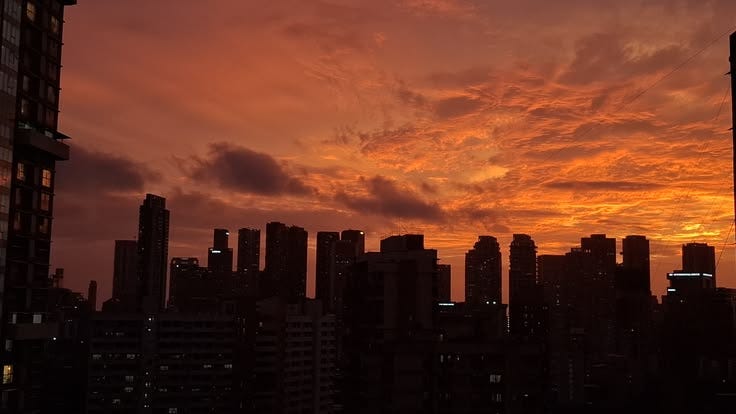
“Nietzsche once said that the strength of your spirit depends on how much truth you can bear. That thought hasn’t left me in a long time.”
“How strong do you think you are?”
“I don’t know, it’s not a simple question. How much truth are we willing to leave untouched — under the weight of our beliefs, our ideas of how this world works? Maybe I don’t know much ‘truth,’ but I know it tastes bitter, and it breaks the reveries our dreams rest on. Who needs a truth like that?”
“They say the truth sets you free.”
“More likely it just helps you get used to reality faster. The fewer illusions we feed ourselves, the less it hurts to fall. Our castles in the air shatter against the sharp edges of reality — but I’d rather live bleeding, with shards of truth lodged in my body, than float in some invented paradise of ignorance.”
She sat with her hands braced on her knees, her eyes meeting the morning sunrise ten stories up, her right shoulder pressed against mine. We’d talked through the whole night without noticing.
Without looking away from the waking sun, she asked:
“How many sunrises like this do we have left? How many more conversations like this before we’re gone? I can’t enjoy a moment knowing its end is already coming.”
I didn’t know what to tell her. She was too clear-eyed to be won over by some “Everything will be fine” or “Just don’t think about it” — she needed an answer just as clear-eyed, or plain silence. I didn’t want silence.
“We don’t stop listening to good music just because we know it’ll end. Maybe knowing it will end is exactly what makes it worth more.”
“So if our meetings went on forever, they wouldn’t be as valuable to you?” she asked, our eyes crossing.
“They’ll always be valuable to me — probably because it’s all already long over.”
I stood to meet another new day, with new hope. The city was slowly coming alive with the roar of cars below. I stared into the abyss from where I stood, the abyss starred back at me.
My shoulder pressed into the wind. My feet began moving toward the edge on their own, the abyss calling louder. The sun kept up its resurrection, a reminder of the future, of all the good that might still come. My eyes started stinging, blurring everything — sometimes that happens when you meet sorrow head-on. Stinging acid running down my face.
“I don’t know if I’m strong enough to accept this truth.”
I turned — she was still sitting there, hands braced on her knees. A moment later the wind carried her off again, into the far corners of my mind, leaving me alone on the edge of the ten-story building.
I don’t know how many sunrises like this we have left... I truly don’t.
This reads less like a dialogue and more like two parts of the same mind wrestling with the weight of existence.
What stayed with me most wasn't the Nietzsche reference, but the exchange about music ending. It's such a simple response, yet it captures something profound: impermanence doesn't diminish meaning, it gives it shape. We don't cherish moments despite their ending. We cherish them because they end.
The final reveal also landed beautifully. Realizing she was never physically there transformed the entire conversation into something much more intimate, a dialogue with memory, grief, or perhaps the version of ourselves that still refuses to let go.
The closing line doesn't offer comfort, and I think that's why it works. Some questions aren't meant to be answered. They're simply meant to be carried, one sunrise at a time.
Your dialogues are always so detailed and beautiful 🥹
I especially love the one describing shards of truth - that is an amazing analogy.
The detail is just so special in all your pieces, I feel like re-reading brings out so much more each time - like how he feels as though she's leaning on his shoulder but then towards the end it's the wind, the storytelling is so clever and quietly leaves you with so much to think about. I feel like so many people could read this piece and see a different thing, and that is an incredible thing to do with writing.
Also the juxtaposition between the fleeting conversation of truth and it's value - and the transience of the sunrise that shines the light on these problems, is the perfect mirror with the sunrise acting like a gentle yet powerful force - one which we all base our lives around yet hardly stop to appreciate or recognise - we really don't know how many we have.
It reminds me of the amazing poem by Robert Frost called 'Nothing gold can stay' symbolising the temporary golden light of the morning - that forever fades too quickly, and how nature even grieves the transience - trying to hold onto what can never stay. It's a really special poem <3
Sunrises are beautiful but sometimes the light is too harsh - but in my opinion, even then it's still better to seek the truth then choose to be blind by just looking at the light.